


The sponge city principle rethinks how cities respond to rain. Instead of draining water away, it focuses on absorption, delay, and storage, allowing cities to work with water rather than resist it.
The Sponge City Principle
Field Notes by AIQYA Research
Why cities must learn to absorb, not resist, water
When rain falls on a city, it reveals its true intelligence.
Some cities receive it quietly. Others panic.
For a brief moment, rain exposes what usually remains hidden. Streets darken, air cools, and surfaces begin to speak. Water searches for ground, for edges, for patience. In that search, a city’s design choices are laid bare. What follows is rarely about the intensity of rain. It is about how prepared the city is to accept it.
Modern cities have been taught to move water away as quickly as possible. Drains, pipes, and channels are designed for speed. Rain is treated as an inconvenience, something to be evacuated before it interrupts traffic or routine. This instinct to resist water is deeply embedded in contemporary planning. Yet it is precisely this resistance that turns rain into risk.
Flooding is rarely about too much rain.
It is about too little ground.
The sponge city principle begins with a different assumption. Instead of asking how quickly water can be removed, it asks where water can be held. Instead of focusing on flow alone, it considers absorption, delay, filtration, and recharge. Rain is no longer seen as an external threat but as part of a continuous urban cycle.
The first break in this cycle often happens at the ground. As cities grow denser, soil is compacted, covered, and disconnected from rainfall. What was once absorbent becomes sealed. Roads, podiums, and paved surfaces replace living ground, forcing water to skim across the city rather than sink into it. Flooding, in this sense, is not excess water. It is displaced water.
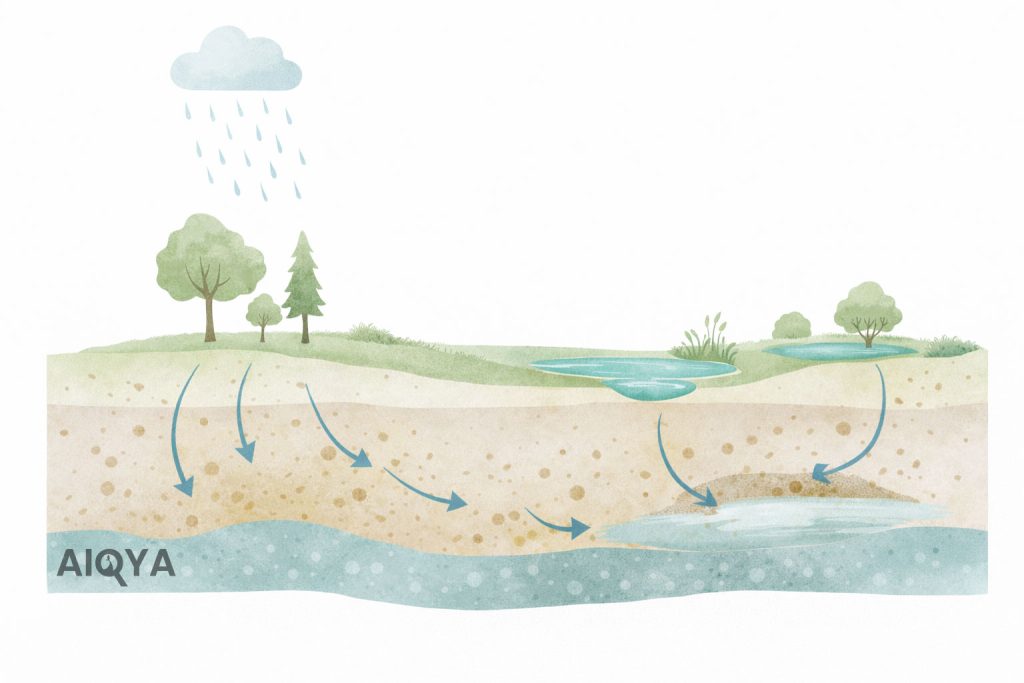
When rain is allowed to reach the soil, its behaviour changes. It slows. It cools the surface it touches. It filters through layers that replenish groundwater and stabilise urban temperatures. Landscaped areas, often dismissed as visual relief, quietly perform as reservoirs. A modest patch of permeable ground can hold more water during a storm than an uninterrupted stretch of asphalt ever could.
Surfaces shape this relationship further. Smooth, continuous hardscapes are efficient for movement but unforgiving to water. Sponge city thinking introduces interruption. Porous pavements, fractured edges, planted courts, and softened paths allow rain to enter rather than deflect. The aim is not to eliminate hard surfaces, but to reduce their finality. When surfaces give way, even slightly, water begins to behave less aggressively.
Edges matter just as much as surfaces. Lakes, nalas, wetlands, and low-lying buffers are not leftover spaces. They are thresholds where water negotiates its presence. When these edges are narrowed, walled, or built over, water loses its margin for error. When they are widened and respected, overflow becomes predictable rather than destructive. A city that understands its edges understands its limits.
They were hydrological infrastructure embedded in daily life.
Rain was captured, stored, shared, and celebrated.
Time, however, is the most overlooked dimension of all. Conventional drainage systems are designed to accelerate runoff. Water is pushed away before it can accumulate. Sponge cities work in the opposite direction. They slow the water down. By delaying runoff, they reduce peak flooding, recharge aquifers, and moderate surface temperatures. The act of slowing water becomes an act of calming the city itself.
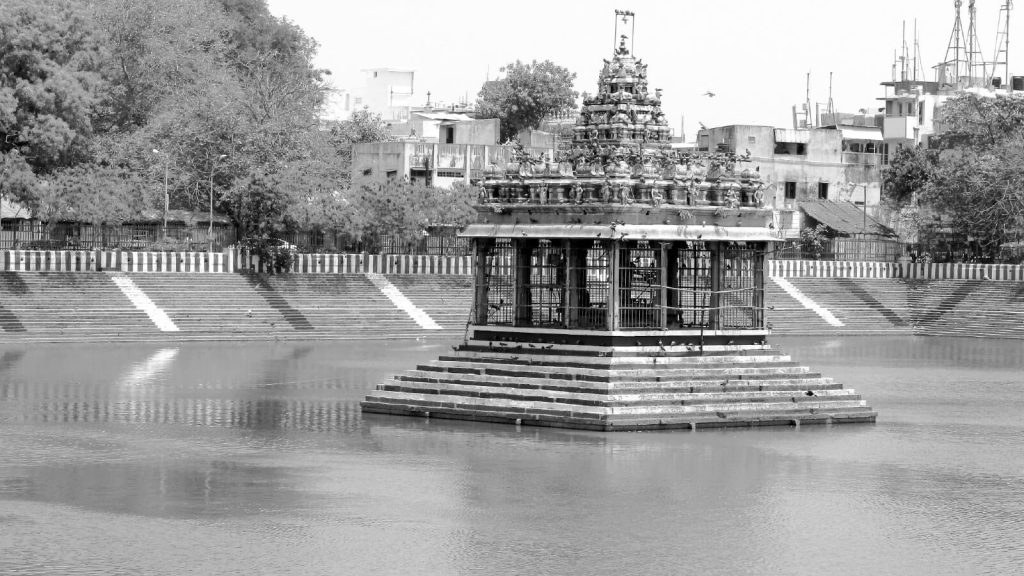
Long before the term “sponge city” entered planning vocabulary, settlements across India practiced this logic instinctively. Stepwells, tanks, village ponds, and temple lakes were not ornamental features added to the landscape. They were hydrological infrastructure embedded in daily life. Rain was captured, stored, shared, and celebrated.
These systems worked because they were local and incremental. They responded to soil, slope, and season rather than universal standards. Water was visible and social, tied to ritual, memory, and collective upkeep. The city did not hide its relationship with rain; it lived alongside it.
Modern urbanism replaced this distributed intelligence with centralized drainage and invisible pipes. In doing so, it gained speed but lost resilience. What was once absorbed gradually by the ground and community now rushes across sealed surfaces, searching for an exit.
As urban flooding becomes more frequent, planners are rediscovering a simple truth: water cannot be managed only underground. It must be given space above ground, allowed to linger, and permitted to follow its own logic. The sponge city is not a futuristic invention. It is a recovered understanding.
A resilient city does not push water away.
It makes room for it.
Field Notes is AIQYA Research’s ongoing journal on livability, urban systems, and the evolving language of human habitats.