
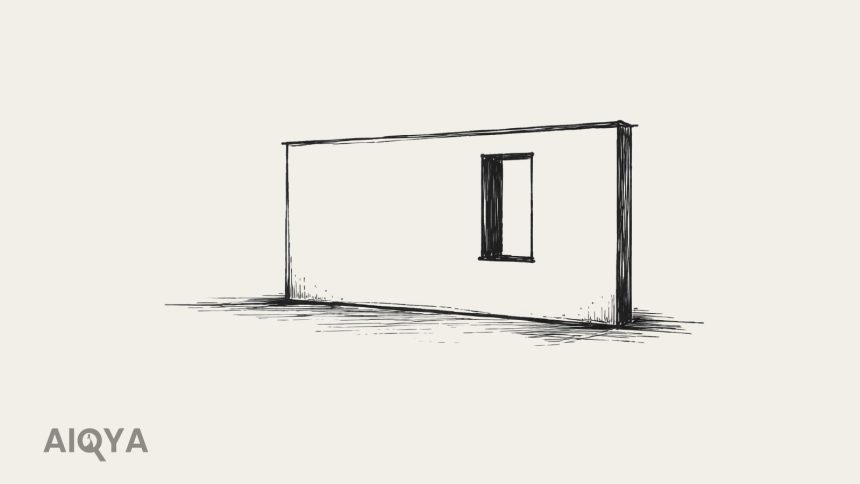
The architecture of pause is not about stopping movement, but about allowing it to soften. In a world designed for efficiency and flow, spaces that permit stillness feel almost accidental. Yet pause, when offered intentionally through proportion, light, and restraint, restores dignity to how we inhabit buildings and cities.
Most spaces are designed to move us along. Corridors narrow, paths straighten, and signage urges direction. Even places meant for gathering assume motion as the default state. Pause, when it occurs, feels incidental, something borrowed rather than offered.
Yet pause is not the absence of activity. It is a spatial condition. It happens when a place stops asking us to proceed and allows us to remain. Architecture does not create pause by adding furniture or amenities. It creates pause by withholding instruction, by leaving room for stillness to occur naturally.
Pause, when it occurs, feels incidental, something borrowed rather than offered.
In older environments, this permission was embedded rather than named. Steps widened near thresholds. Verandahs blurred the line between inside and out. Courtyards absorbed light and sound before releasing movement again. These were not spaces of rest by designation. They were spaces that understood rhythm.
Modern design removes these moments in pursuit of efficiency. Circulation becomes linear. Thresholds are compressed. Waiting is treated as friction rather than experience. What disappears is not comfort, but dignity, the right to slow down without justification.
Pause, then, is not a luxury. It is an architectural decision.
Pause often appears where architecture loosens its grip. Where edges soften, light settles, and movement is no longer prescribed. A shaded step outside a doorway, a widened landing between floors, a low wall that catches the afternoon sun — these are not destinations, yet they become places. They allow the body to arrive without having to decide.
These are not destinations, yet they become places.
Such moments rarely announce themselves. There are no signs asking us to stop. Instead, proportion does the work. A ceiling lowers slightly. A path bends rather than continues straight. A threshold deepens just enough to slow the pace. These are small spatial decisions, but they alter behaviour quietly and consistently. Where space compresses and releases with care, pause emerges naturally.
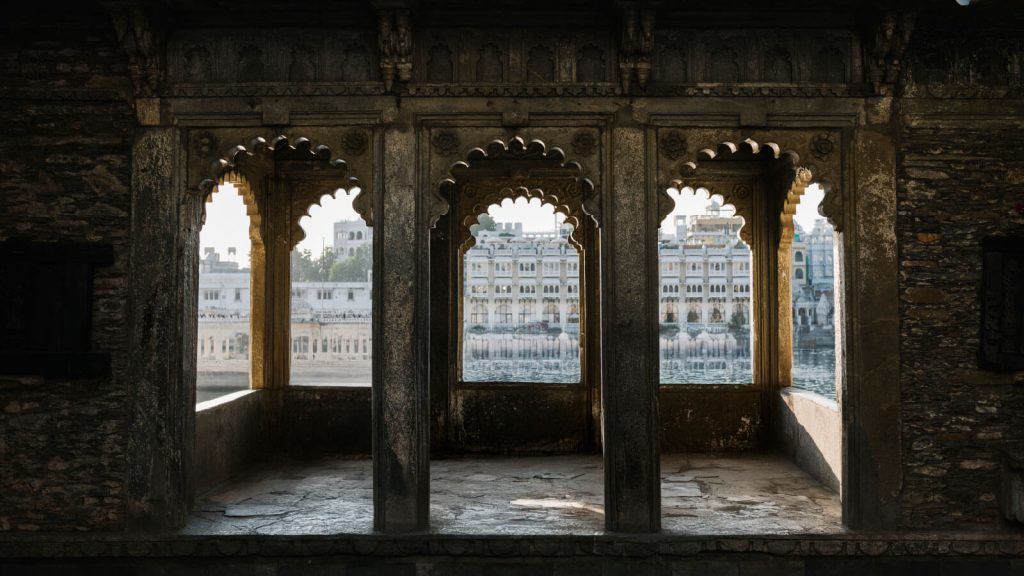
Traditional environments understood this rhythm instinctively. Movement was rarely uninterrupted. Courtyards interrupted interiors. Verandahs softened transitions. Temple steps widened toward water, encouraging sitting, waiting, watching. These spaces did not demand stillness, nor did they rush it away. Pause was not programmed; it was permitted.
Much contemporary design mistakes pause for inefficiency. Circulation is streamlined. Lobbies are cleared. Waiting is reduced to a functional minimum. In this pursuit of smoothness, architecture removes the very friction that allows presence. Spaces become passages, not places. What remains efficient is often restless.
The absence of pause changes how we inhabit buildings and cities. When every surface directs us forward, stillness feels out of place. We wait standing. We sit only where instructed. The body adapts, but something subtle is lost. Without pause, movement becomes compulsory rather than chosen.
Pause restores choice. It allows a moment to linger without justification. It gives time shape. Architecture that accommodates pause acknowledges that human experience does not unfold in straight lines. It bends, hesitates, and returns.
In contemporary environments, pause has not vanished entirely. It survives in places where design attention momentarily shifts away from efficiency. A widened stair where people gather despite the absence of seating. A shaded setback along a street where walkers slow instinctively. An atrium edge where light pools long enough for someone to stop and look up. These are not planned destinations, yet they become occupied repeatedly. Their success lies not in intention, but in allowance.
What distinguishes these moments is not scale or expense, but restraint. Nothing insists on use. Nothing instructs behaviour. The space simply does not hurry the body onward. In an age of constant acceleration, this absence of urgency feels almost radical. Pause, here, becomes a quiet form of resistance — not to movement itself, but to the idea that movement must always be continuous.
When such spaces are missing, architecture grows louder. Corridors lengthen without relief. Waiting areas shrink into thresholds that cannot hold a body comfortably. Even outdoor spaces are treated as transit zones rather than places of arrival. The result is not faster living, but thinner experience. Time is compressed, not enriched.
Pause thickens time. It gives duration weight. A moment spent sitting, watching, or simply remaining is not unproductive; it is connective. It allows people to register light, sound, temperature, and one another. Architecture that permits pause acknowledges this deeper rhythm – that living unfolds not just through action, but through intervals.
This is not a behavioural problem.
It is a spatial one.”
The absence of pause is felt first by those who move at a different pace. Children notice it immediately. They stop without reason, wander without destination, and occupy space without urgency. When streets, corridors, and public edges make no allowance for this behaviour, discomfort appears quickly. This is commonly mistaken for a behavioural problem. It is not. It is a spatial one. A city that has no room for children to pause has quietly decided who it is designed to welcome.
The architecture of pause, then, is not about stillness alone. It is about respect. Respect for the body’s need to hesitate. Respect for time as something to inhabit, not manage. When buildings and cities allow these moments to exist, they offer more than comfort. They offer dignity.
Pause does not need to be designed loudly. It only needs space to exist.